

What To Do If You Spot An Injured Marine Animal
Encountering injured marine animals by accident can be an emotionally charged and sometimes surprising experience, whether you are out on the water, walking along the coast, or simply exploring the ocean. Many of the marine animals that people spot (sharks, turtles, seals, seabirds, whales) help to keep our oceans healthy and in balance. Calmly responding appropriately to find help for an injured marine animal is essential because doing the wrong thing can cause more harm than good. The purpose of this guide is to assist you in what to do if you come across an injured marine animal, while protecting the well-being of the injured marine animal, your personal safety, and supporting local ocean conservation efforts.
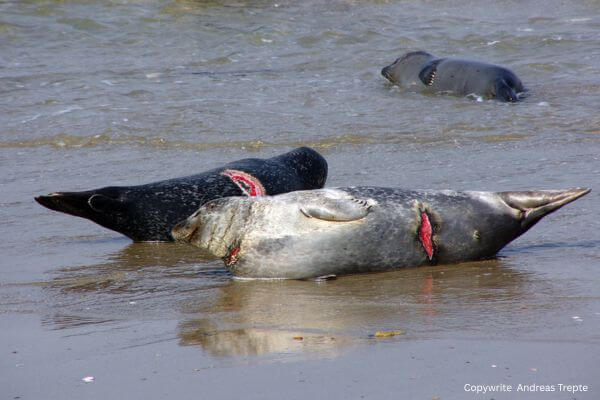
Why Does It Matter When You Encounter A Wounded Marine Animal?
The fact that you have come across an injured marine animal indicates a significant issue with the ocean. The issues can include, but are not limited to, pollution, derelict fishing nets, collisions with boats, and habitat disruption. These issues do not just affect a single injured marine animal; they can also affect the entire marine ecosystem, given the interconnectedness of all marine animals. It is at this time that how you choose to react is crucial — if you remain calm and take action based on knowledge, your actions may prevent additional injuries to the marine animal from occurring while avoiding unnecessary disturbances to the injured animal and potentially protecting both the marine animal and the overall health of the marine environment.

How To Recognise Signs Of Injury Or Distress In Marine Wildlife
You need to evaluate the situation before you start any intervention. Some signs to look out for:
- The animal gets caught on a fishing line, in a net, or in a rope.
- It shows unusual swimming behaviour, such as floating abnormally, circling, or appearing weak and listless
- There are visible injuries, including missing body parts or damaged fins, flippers, or wings
- The animal is stranded outside its natural environment, such as on a beach or rocks
- It remains in an abnormal position, lying on its side or upright without moving for long periods
- The body shows discolouration, open wounds, or lesions, sometimes with debris attached
Recognising these warning signs helps determine whether an animal may need assistance or is best kept at a safe distance and contact the appropriate authorities rather than intervening directly.
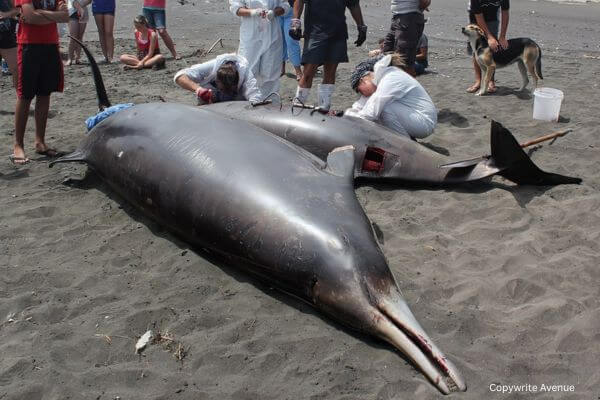
What Should You Do First If You Spot An Injured Or Stranded Marine Animal?
Maintain your composure while keeping a safe distance from the situation. Find a secure observation spot which will not disrupt the animal’s environment.
Maintain silence while watching the animal from a distance, as your presence could stress it or cause accidental harm.
Record the following information:
- Note the animal’s location using the beach name, GPS coordinates, and nearby landmarks.
- Make a record of the animal species or provide a detailed animal description.
- Record the total number of animals present when there are multiple animals involved.
- Record all observed activities of the animal, including floating behaviour, entanglement, injury, and behavioural patterns.
- Only trained personnel who have proper authorisation and suitable equipment should attempt to rescue or move the animal. The most effective help comes from making professional rescue calls.
- Reach out to your local wildlife authority or rescue organisation to report your animal sighting and follow their established procedures.
Only trained and authorised personnel equipped to rescue or relocate marine animals should do so. The best thing you can do to help is to contact your regional wildlife agency/rescue organisation and follow all their directions, as they will advise you on what action to take. In the United States, NOAA Fisheries has stated that if you see a marine mammal stranded, contact your local marine mammal stranding network (you may want to call them from a distance) so they can send someone out to assist and keep a safe distance until they arrive. All other countries have similar local authorities that need to be contacted right away.
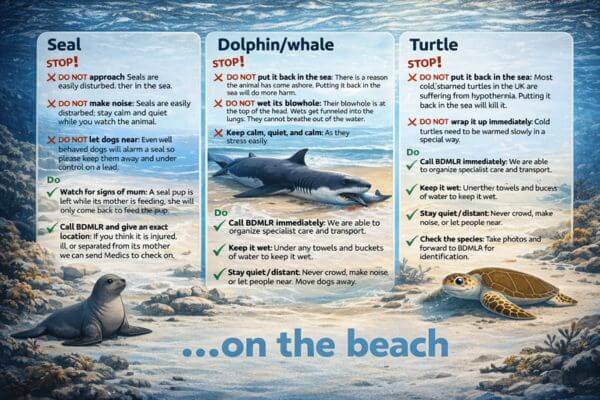
What Not To Do When You See A Distressed Marine Animal
When you encounter an injured marine animal, it is important not to return it to the water or attempt to move it into deeper areas. Doing so can worsen injuries, increase stress, or interfere with professional rescue efforts. Avoid touching, feeding, chasing, or handling the animal, as human interaction often causes additional harm. Loud noises, sudden movements, or crowding can significantly increase distress, especially for sharks or other large marine predators. Do not attempt a rescue yourself — the safest and most effective response is to keep your distance, remain calm, and allow trained professionals to handle the situation. Trained professionals may remotely guide you on what to do and what not to do; however, you should always contact local professional rescue services and follow their advice diligently.
How Should You Report An Injured Marine Animal In The Wild?
Who to call and what information to provide
When you decide a formal report is needed, here’s what you should know:
- The correct local authority for marine conservation organisations, wildlife rescue services, and stranding networks needs to be identified.
- The report should include the total number of animals, their status (alive or dead), and their entanglement condition. It should also include specific details about the location, using GPS coordinates or landmark identification, and, if possible, species identification, as well as any present hazards such as nets, rope, or oil.
- Stay at a safe distance when instructed, and maintain your position in the area until professional help arrives.
- Taking safe photos and videos helps responders identify the situation and determine the most critical response needs.
- The U.S. Marine Programs state that reporting incidents of entangled, stranded, sick, or injured animals represents the most effective course of action.
For injured marine animals in South Africa, immediately call the NSRI (National Sea Rescue Institute) at 112 or 087 094 9774 for emergencies. Region-specific contacts include the Two Oceans Aquarium (083 300 1663) in the Cape, uShaka Sea World (031 328 8222) in KZN, and SANCCOB (021 557 6155) for seabirds.
Why Your Role On Marine-Adventure Trip Matters
As a snorkeler, diver or observer of sharks, or marine biology tours, your eyes and ears are critical to the ocean. The ability to be in the water or on a vessel provides a unique opportunity to recognise changes in marine ecosystems that most people will never have the chance to see. Simply by being calm and observing apex predators and other wildlife, you can provide the first indication of stress in yourself or in animals, such as injured marine animals, entanglement, or abnormal behaviour. When you respond to these situations thoughtfully and responsibly, you will help protect both yourself and the animals while providing less disruption to their natural habitats. In addition, sharing your accurate knowledge with students, eco-tourists, and fellow adventurers will help to foster a culture of respect for marine life and build a conservation-conscious community. With the privilege of having such a unique view of the ocean comes the obligation to be responsible, and that means observing the environment carefully, responding respectfully to the animals, and contributing to the long-term sustainability of the ocean.
What To Do If You Spot An Injured Marine Animal While On-Site
- Maintain a distance of at least three meters from the animal when you are on the surface, on the boat deck, or standing on the shore.
- Record all observations about species identification, size measurements, animal condition, exact location, and time of sighting.
- Notify all members of your group and your dive leader before taking any action, and keep them informed of your actions.
- Share your recorded data with the local wildlife authority and follow their instructions.
- Maintain a safe distance from the animal’s area, keeping all people, animals, and boats outside this zone.
- The animal requires no human contact; avoid feeding it, keep your distance, and refrain from moving it.
- Take safe photographs and videos from afar to create documentation records.
- Follow all instructions from professional responders while keeping a safe distance from their work area.
Why This Matters For Shark Dive And Snorkel Localisation
Your ability to identify injured marine animals enables you to support conservation efforts during these encounters, rather than focusing solely on the adventure aspect. Your actions protect the entire ecosystem which you travelled to experience.
Your responsible actions during shark cage viewing, reef fish snorkelling, and pelagic species swimming create value for both you and the marine ecosystem.
Common Questions and Answers
Q: Is it safe to approach an injured shark or marine predator?
A: No. A shark or large marine animal remains capable of fast and unpredictable movements even when it seems motionless or shows signs of distress. Keep a safe distance from the animal while you wait for trained professionals to arrive.
Q: What if the animal is a species we recognise (e.g., turtle, ray)? Can we help it ourselves?
A: Your safest contribution as an untrained person involves reporting the situation while maintaining a safe distance from the animal. The problem will become more dangerous when you attempt to handle the animal without proper training and equipment.
Q: Are sharks ever endangered when injured or entangled?
A: Yes. Marine predators, including sharks, face multiple threats from fishing gear, environmental pollution, disappearing habitats, and entanglement in fishing nets. Observing and notifying of injured sharks and active predators helps protect both wildlife populations and scientific research efforts.
Q: Can I continue my dive or snorkel after seeing an injured animal?
A: The answer depends on the specific circumstances of the situation. Follow the guidelines of the appropriate professionals.
The ocean exploration experience through shark-cage diving, snorkelling, and marine biology will lead to encounters with injured marine animals that require careful handling. Your ability to help marine life does not require any special expertise. Maintain composure, keep a safe distance from the animal, and observe its behaviour before sharing your findings with others. Your ocean conservation efforts enable sharks, rays, and other marine predators to maintain their essential ecological functions.
Our homepage provides information about shark diving in Durban, South Africa, and offers guided ocean adventures that promote awareness and respect for the marine ecosystem.