

Learn About The Tiger Shark: The Striped Hunter Of The Ocean
The tiger shark has become an interesting and respected species in the ocean. This shark is considered one of the best predators on earth because it sits at the top of the marine food chain, making it a formidable hunter. The Tiger Shark can be identified by its distinctive stripes and a large, muscular body, which allow it to live in many marine ecosystems throughout the world’s oceans, as well as off the coast of South Africa. The Tiger Shark’s ability to hunt is impressive, but the importance of the Tiger Shark extends further than just being able to catch prey.
Is The Tiger Shark Dangerous?
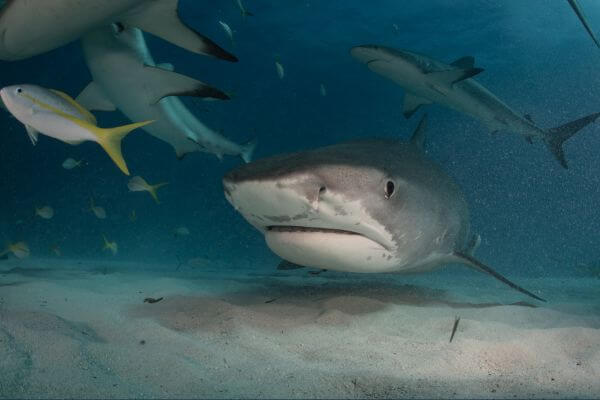
The Tiger Shark is a species of shark with a dangerous reputation. The shark’s size, muscular build and curiosity about unknown items in its habitat contribute to this reputation. However, attacks by tiger sharks are extremely rare. Because of their broad diet and their investigation of all unknown items in their environment, when tiger sharks encounter an object they cannot immediately identify as food, they may bite it, believing it to be a normal prey item, rather than intentionally attacking people. A great deal of tiger shark activity occurs in relatively shallow water off coastal areas, and they consume a very wide variety of turtle, ray and fish species. While strong and capable of great damage, the Tiger Shark is not typically motivated to pursue or attack humans. In Durban, professional divers have engaged in shark research and diving programs, allowing them to gain an understanding and appreciation for these sharks and to develop ways to safely interact with them.
Diet And Habitat Of The Tiger Shark
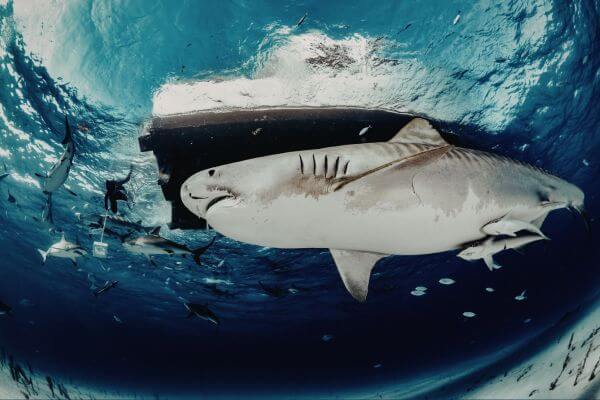
The Tiger Shark has been described as “the garbage collector” of the ocean due to its very extensive and opportunistic dietary habits. This title applies to the shark’s ability to eat many types of food it encounters while swimming in coastal areas, not specifically to it eating trash.
Tiger Sharks can be known to eat:
- Sea Turtles
- Birds that live at sea
- Smaller Rays and other Sharks
- Squid and a multitude of different fish species
- On occasion, floating debris is mistaken for something to eat
Tiger Sharks inhabit tropical and subtropical oceans worldwide and prefer to live in close proximity to coastal areas, including coral reefs and estuaries, where they can find abundant food. In the vicinity of the Durban coast, tiger sharks tend to appear most frequently in the warmer months, when warmer water and seasonal conditions create better opportunities to attract prey into the area. Tiger Sharks are predominantly night hunters, relying heavily on their strong sense of smell and electroreception to locate and identify prey in poorly lit or blackout conditions.
Size and Lifespan Of A Tiger Shark
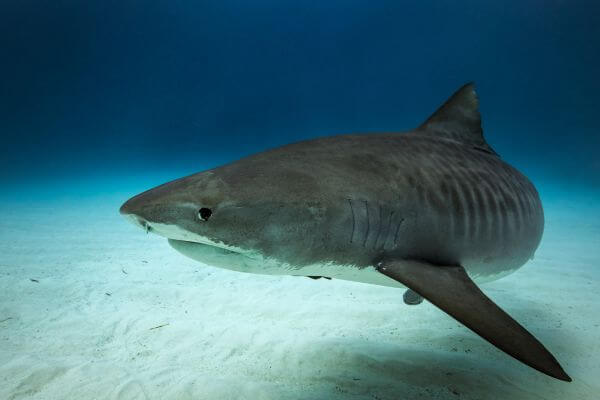
The tiger shark is a top predator that has successfully thrived in warm coastal waters worldwide because of its large body size, strength, and relatively long lifespan.
Length:
Average length – 10-15 feet
Maximum length – up to 18 feet
Weight:
Typical female weight – 880-1,320 pounds
Large female – up to 2,000 pounds
longevity:
Estimated age – 20-50 years
Reproduction:
Female tiger sharks are generally larger than male tiger sharks
Females will produce a litter of 30-40 live pups after a 14-month gestation period.
Because tiger sharks can produce offspring at a much higher rate than many other large predatory shark species, they are often viewed as among the most resilient and successful large predators in the ocean.
Can Tiger Sharks Live In Freshwater?
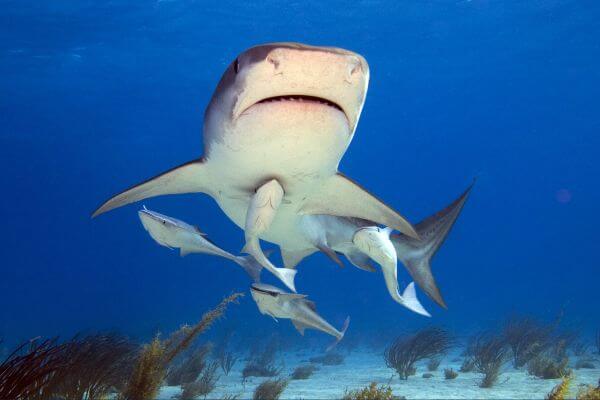
The Tiger shark has difficulty regulating salt in its body with pure freshwater because it relies on salt to maintain the correct fluid balance, as do other marine sharks. While Tiger sharks can live in Brackish waters (which are both Freshwater and Saltwater mixed together) of various types, including river mouths, estuaries, and lagoon coastlines, they will have to stay at least partially in saltwater to be able to survive for extended periods of time. Their ability to adapt to these changing environments is also evident in how often they visit the shallow coastal zones near the surf area, which experience fluctuating temperatures, salinity, and current conditions.
Are Tiger Sharks Protected?
While some international laws protect tiger sharks, others vary by country, depending on their specific conservation laws and fishing regulations. The International Union for Conservation of Nature (IUCN) lists tiger sharks as “Near Threatened,” meaning they are not endangered at present; however, there is an increasing risk that future tiger shark populations will be unable to maintain stable populations.
Tiger sharks face a number of major threats, including being accidentally caught in commercial fishery nets as bycatch, the loss/degradation of coastal habitats, and the targeting of tiger sharks for fin/trophy hunting in some areas. As a result, many countries have implemented shark protection laws and created marine protected areas to limit human impacts. Additionally, researchers in South Africa continue to study tiger sharks through continued tiger shark research/satellite tracking studies to understand tiger shark migratory habits, habitat use, behaviour, etc., so that scientists can develop strategies for long-term conservation/management of tiger sharks.
Is It Safe To Swim With Tiger Sharks?
People may safely swim or dive with tiger sharks if they participate in experiences under the direct supervision of an expert and within the parameters of strictly outlined safety guidelines. Professional shark diving operators in South Africa and around the world operate under strict regulations and use safety protocols to minimise risk for both human participants and tiger sharks.
Examples of safety protocols used by certified/regulated operators include:
- Divers will be guided by an experienced guide at all times and will follow the guide’s direction on where to position themselves, when to enter the water, and how long to remain submerged during the dive.
- Only officially authorised and legally approved methods of attracting sharks (baiting) may be used by operators, and then only under specific conditions and circumstances.
- The participants on the dive will need to behave non-threateningly and maintain a safe, respectful distance from the tiger sharks.
- Each encounter will be observational, allowing the participant to view the natural behaviour and movements of tiger sharks in a non-invasive manner.
Many individuals who have encountered tiger sharks report that they are calm, deliberate swimmers who seem curious about their surroundings rather than aggressive. To ensure a safe and enjoyable wildlife experience when interacting with tigers and sharks, it is essential to understand their behaviour, remain composed, and follow professional guidance. When entering the ocean, always follow established shark-safety and prevention guidelines.
The Role of The Tiger Shark In The Ocean Ecosystem
Apex predators can regulate the number of less fit individuals in many marine ecosystems; when apex predators are removed, these systems can be adversely affected. The removal of the tiger shark from its position as the apex predator will have a negative effect on all other marine ecosystems that it has been a part of. When the tiger shark is gone, the prey species for the tiger shark will decrease dramatically. This will put the reef systems under significant pressure. Eventually, this will result in severe damage to both coral reefs and coastal habitats, as well as individuals in many different marine ecosystems; when apex predators are removed from marine ecosystems, the effects can be detrimental to these systems.
Conservation and Awareness Of The Tiger Shark
The modern approach to conserving tiger sharks is to replace fear with education, informing the public about the shark’s behaviour and encouraging them to interact with them responsibly. Education programs have been developed that provide opportunities for people to experience the beauty and importance of tiger sharks in their natural habitat, helping many begin to understand the importance of these often-misunderstood predators. As tourists participate in sustainable shark diving operations, they are able to make direct contributions to research efforts, satellite tracking programs, and other long-term conservation initiatives that work to protect tiger sharks and the marine ecosystem they inhabit.
Discover The Power Of Tiger Shark Diving In Durban
The ability to view such an incredible predator in its natural habitat is a direct result of learning about it. Durban Shark Diving is a professional cage diving tour operator that offers divers the opportunity to see tiger sharks, oceanic black tips, and other pelagic species along South Africa’s warm tropical coastline. The dives are used as part of our educational efforts to conserve ocean predators that are important for maintaining the balance of marine ecosystems. An experience with Durban Shark Diving is much more than just an adventure; It is also a once-in-a-lifetime opportunity to develop a connection with the wild beauty and the raw power of the open ocean.